 KATARIBE
Kiyomizu-dera 清水寺
A National Treasure hall on wooden stilts, founded before Kyoto was the capital.
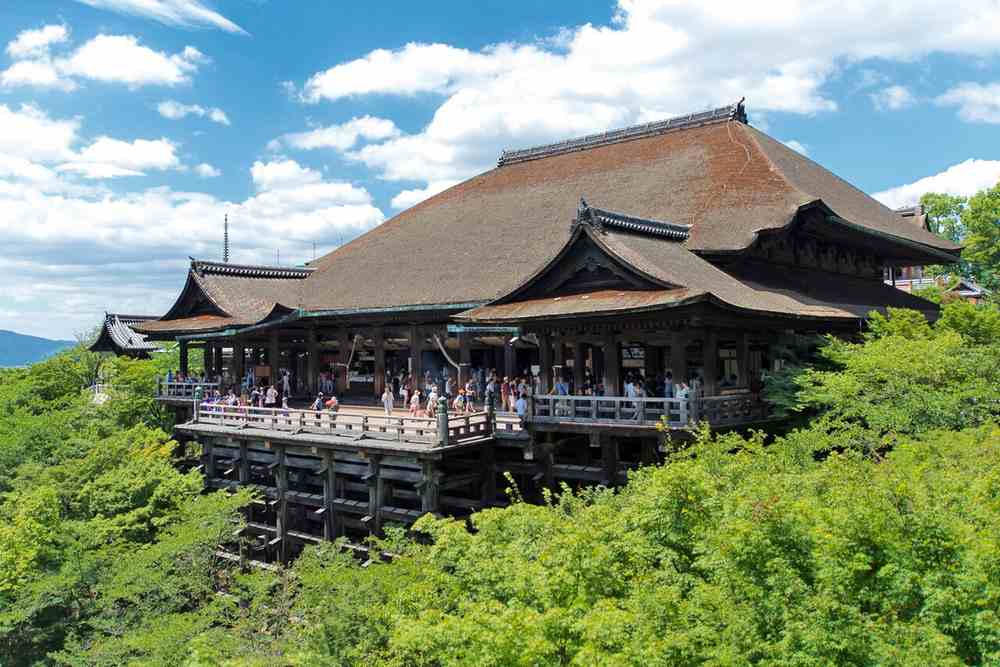 Photo: Wikimedia Commons
Is Kiyomizu-dera worth visiting?
Yes. Kiyomizu-dera is one of the few Kyoto temples older than the capital itself, founded in 778, and its main hall — a National Treasure rebuilt in 1633 — carries a veranda standing thirteen metres above the slope on tall wooden pillars, assembled without a single nail. It is part of the Historic Monuments of Ancient Kyoto World Heritage Site. Gates open at 6:00 a.m., the quietest hour on the hillside. Allow ninety minutes.
The story
The temple's founding story starts with water. In 778 a monk named Enchin followed a golden stream up Mount Otowa and found an ascetic keeping watch over a waterfall. Two years later Sakanoue no Tamuramaro climbed the same mountain hunting deer — he wanted the blood as medicine for his sick wife — and Enchin talked him out of the kill. Tamuramaro gave his own house to serve as the main hall and named the place Kiyomizu, pure water.
Kiyomizu-dera has burned down nine times since 1063, twice in fights it had no part in: Enryaku-ji's warrior monks torched it in 1165, and the Ōnin War finished it in 1469. The hall standing today dates from 1633, paid for by the shogun Tokugawa Iemitsu. Its veranda was built to hold pilgrim crowds, and Edo-period Kyoto turned it into a dare. Records count 234 jumps, of which about 85 per cent survived; the practice was banned in 1872.

Stand at the edge of the Hondō veranda and Kunato tells you the rest — including which shogun paid for the hall under your feet, and what happened to the 234 people who jumped from it.
Hear it in the appVisiting
The temple does not publish a standing fee table; the ¥500 / ¥200 rates above come from its own 2026 special-viewing listing. Confirm the current rate on the official site.
Questions travellers ask
The gates open at 6:00 a.m. every day of the year, and that first hour is the only time the main hall veranda is genuinely quiet. The approach streets, Sannenzaka and Ninenzaka, fill up from mid-morning onward. If an early start is impossible, the last hour before the 6:00 p.m. closing is the next best option.
Partly. The Niōmon gate, the three-storey pagoda and much of the hillside grounds are free to walk through. Admission is charged at the gate just before the main hall, which is where the famous veranda and the Otowa waterfall are. The temple lists ¥500 for adults and ¥200 for elementary and junior high students.
No. In the Edo period people jumped from the thirteen-metre veranda believing that surviving the fall would grant their wish. Records count 234 jumps, of which about 85 per cent survived. The practice was prohibited in 1872. The phrase survives in Japanese: to jump off the stage at Kiyomizu means to take the plunge.

Nearby historic sites in Kyoto
KATARIBE