 KATARIBE
Nijō Castle 二条城
The shoguns' Kyoto residence, and the room where the shogunate ended in 1867.
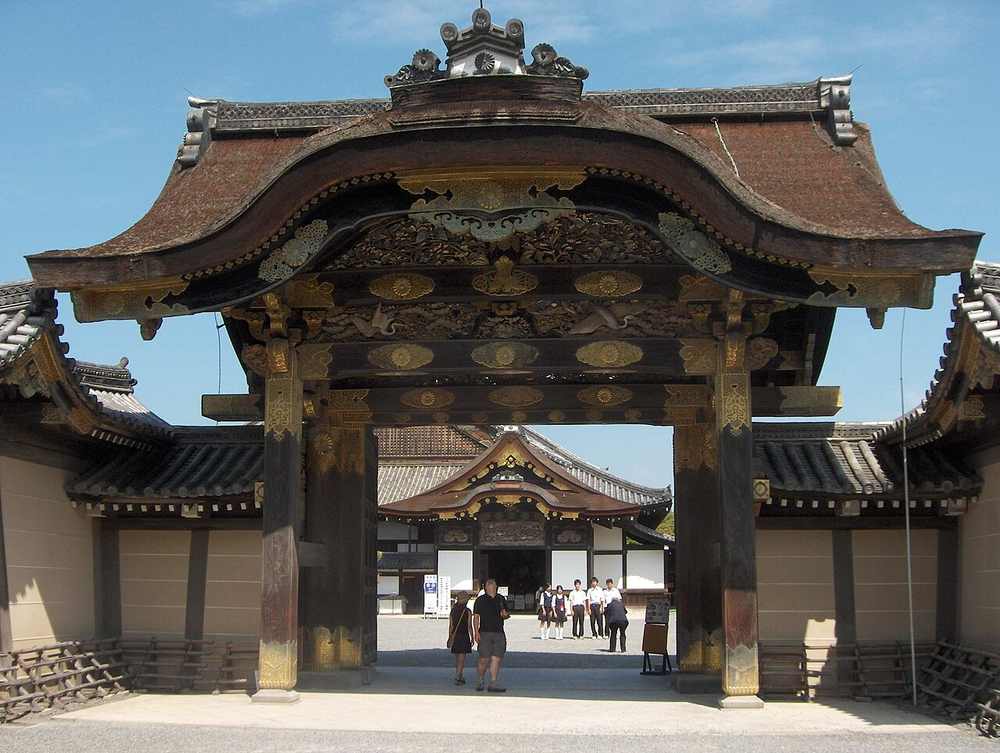 Photo: Wikimedia Commons
Is Nijō Castle worth visiting?
Yes, especially if you want political history rather than another temple. Nijō Castle was the Kyoto residence of the Tokugawa shoguns, and the Ninomaru Palace is where the last of them announced the return of power to the emperor in 1867. The palace still holds its Kanō-school painted walls and its chirping corridors, and the site is a World Heritage listing. Allow ninety minutes to two hours.
The story
Tokugawa Ieyasu ordered the feudal lords of western Japan to pay for this castle in 1601, and his grandson Iemitsu completed it in 1626. Parts of Fushimi Castle, including the main tower, were carted over and re-erected here in 1625 and 1626, and water for the gardens came from the partly abandoned Shinsen-en garden next door. Defence was never the point. The shogunate ruled from Edo; the emperor stayed in Kyoto, and Nijō was the reminder of who held power.
It ended in the room built to display it. In 1867 Tokugawa Yoshinobu used the Ninomaru Palace to declare that he was returning authority to the Imperial Court, and within a year the castle was imperial property and the Tokugawa hollyhock crest was being replaced with the imperial chrysanthemum. The keep had already gone — struck by lightning and burned in 1750 — and the inner ward followed in a city fire in 1788.

Stand in the Ōhiroma of the Ninomaru Palace and Kunato tells you the rest — including why the corridor floors chirp, and why that was never the burglar alarm the guidebooks describe.
Hear it in the appVisiting
Honmaru Palace tickets are released thirty days ahead and are required even for visitors exempt from the admission fee. The Ninomaru Palace also closes 26–28 December and 1–3 January.
Questions travellers ask
Only for the Honmaru Palace. Castle admission and the Ninomaru Palace can both be bought at the gate on the day. The Honmaru Palace requires a web ticket reserved in advance, released thirty days before your visit, and that reservation is required even for visitors who are exempt from the admission fee.
No. The Ninomaru Palace closes 26–28 December, 1–3 January, and every Tuesday in January, July, August and December. If one of those Tuesdays falls on a public holiday the palace opens that day and closes the following day instead. The castle grounds themselves close only from 29 to 31 December.
Ninety minutes covers the Ninomaru Palace and its garden at a walking pace. Two hours lets you add the Honmaru garden, the Seiryū-en garden and the climb onto the old keep foundations, which looks out over the whole enclosure. The site covers 275,000 square metres, so there is more ground here than the palace alone suggests.

Nearby historic sites in Kyoto
KATARIBE