 KATARIBE
Imperial Palace East Gardens 皇居東御苑(江戸城跡)
The inner wards of the shogun's castle, now a free garden around an empty keep base.
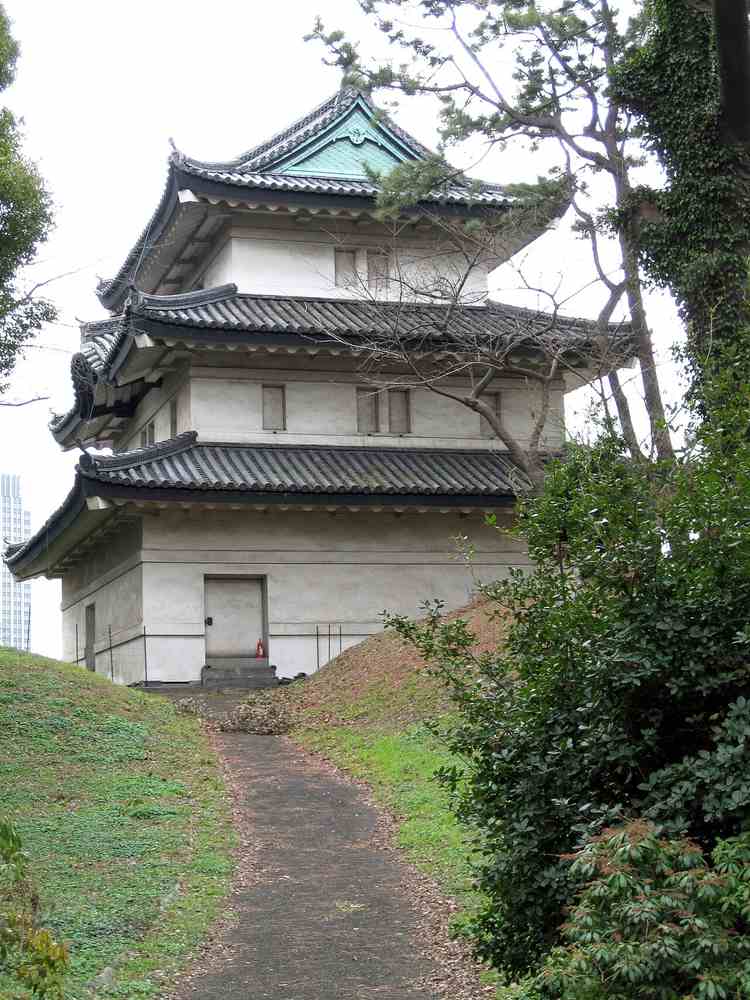 Photo: Wikimedia Commons
Is Imperial Palace East Gardens worth visiting?
Yes, especially since it costs nothing. The East Gardens are the Honmaru and Ninomaru of Edo Castle, the shogun's seat for 265 years, and you can walk straight up onto the stone base where Japan's tallest castle keep once stood. No buildings survive to tour, so come for the walls, gates and guardhouses. Allow 60 to 90 minutes, and check the closing days first.
The story
Ōta Dōkan built the first castle here in 1457. Tokugawa Ieyasu took it over in 1590 and turned it into the largest fortress in Japan by making the daimyō pay for it: each lord supplied granite in proportion to his wealth, and those who could not send stone sent labor to dig the moats instead. The spoil went into Tokyo Bay as landfill, creating the ground the merchant districts were later built on.
The keep rose 51 meters, the tallest castle tower in Japan, and burned for the third and last time in the Meireki fire of 1657. The shogunate cut a fresh stone base ready for a fourth tower and then never built it, so the platform has stood empty for over 360 years. A few minutes south, a stone marker names the Matsu no Ōrōka, the corridor where Asano Naganori drew his sword in 1701.

Stand on the empty keep base in the Honmaru and Kunato tells you the rest — including how one night's fire in 1657 ended Japan's tallest castle tower for good.
Hear it in the appVisiting
Mondays and Fridays are the trap — the gardens are shut both days. The Imperial Household Agency publishes a closing-day calendar and posts unscheduled closures for ceremonies.
Questions travellers ask
Not the palace itself. That is the emperor's residence and needs a separate Imperial Household Agency tour. The East Gardens are a different thing: the old castle grounds, open to anyone, free, with no booking. You get the moats, the gates, the guardhouses and the keep's stone base, but no interiors — almost nothing above ground survives from the shogunate.
It depends what you came for. There is no tower and no palace, so if you want Himeji, go to Himeji. What survives here is scale: moats you could not throw a stone across, walls of granite hauled in from distant provinces, and the Fujimi-yagura turret. It reads as a city plan rather than a building, and it is free.
Mondays and Fridays, plus 28 December to 3 January. National holidays are an exception and the gardens stay open, except the Emperor's Birthday; if a Monday opens for a holiday, the Tuesday after it closes instead. Ceremonies can also close the gardens at short notice, so check the Imperial Household Agency calendar the day before.

Nearby historic sites in Tokyo
KATARIBE