 KATARIBE
Sengaku-ji 泉岳寺
The Zen temple where the forty-seven rōnin buried their lord, then joined him.
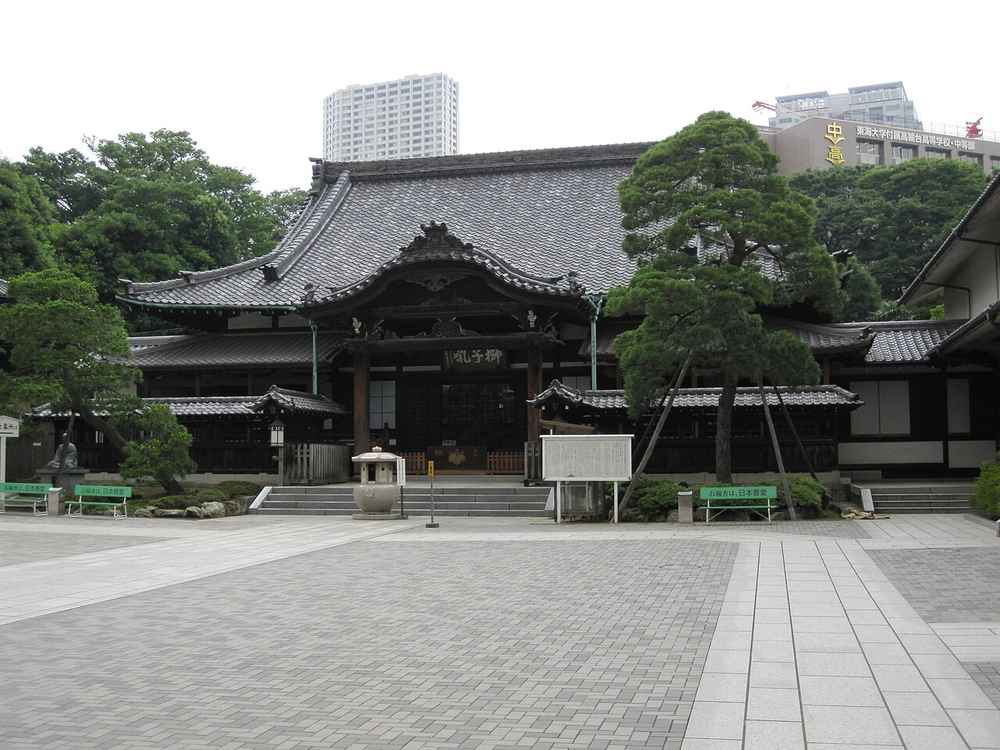 Photo: Wikimedia Commons
Is Sengaku-ji worth visiting?
Yes, if the story of the forty-seven rōnin means anything to you. This is the actual ground: they carried Kira's head here in the winter of 1702, washed it at the well, set it before their lord's grave, and were buried beside him the following year. The temple charges no entrance fee, asks ¥500 for incense at the graves, and ¥500 for its museum. Forty-five minutes covers it.
The story
Tokugawa Ieyasu founded Sengaku-ji in 1612 near Edo Castle, to pray for Imagawa Yoshimoto — the lord in whose household he had been placed as a child hostage. He installed Monan Sōkan, said to be Yoshimoto's grandson, as first abbot. Fire destroyed the temple in 1641, and the third shogun Iemitsu ordered five daimyō to rebuild it in Takanawa. One of the five was Asano, which is how Sengaku-ji ended up with the most famous graveyard in Japan.
On 14 December 1702 the retainers of Asano Naganori killed Kira Yoshinaka, paraded his head through Edo, washed it at a well here and set it before Asano's tomb. They surrendered, were ordered to commit seppuku, and were buried in a row beside their lord in 1703. The row holds forty-eight stones, not forty-seven: Kayano Sanpei, who killed himself before the raid, is buried with them.

Stand at the well inside the gate and Kunato tells you the rest — including why there are forty-eight gravestones for forty-seven men.
Hear it in the appVisiting
The memorial hall shuts half an hour before the gates and can close for a midday break — go there first if you want to see the rōnin relics.
Questions travellers ask
The grounds are. The temple publishes gate hours with no entrance fee, so you can walk in and visit the graves without paying. Two things do cost money: the temple asks a ¥500 incense offering from visitors to the rōnin graves, and the Akō Gishi Memorial Hall charges ¥500 for adults, ¥400 for secondary students and ¥250 for children ten and over.
It helps enormously. In one line: a lord named Asano was forced to kill himself after drawing his sword inside Edo Castle in 1701, and forty-seven of his retainers waited nearly two years, killed the man they blamed, then accepted execution. Without that, the graveyard is just gravestones. With it, the well inside the gate is the whole story.
Tōzen-ji is a four-hundred-meter walk and was the first British legation in Japan, attacked twice by anti-foreign samurai in the 1860s; its grounds are a National Historic Site. Takanawa Shrine is closer still. Shinagawa Station is about a kilometer south, which makes Sengaku-ji an easy stop on the way to or from the shinkansen.

Nearby historic sites in Tokyo
KATARIBE