 KATARIBE
Sensō-ji 浅草寺
Tokyo's oldest temple, built around a statue of Kannon that nobody is allowed to see.
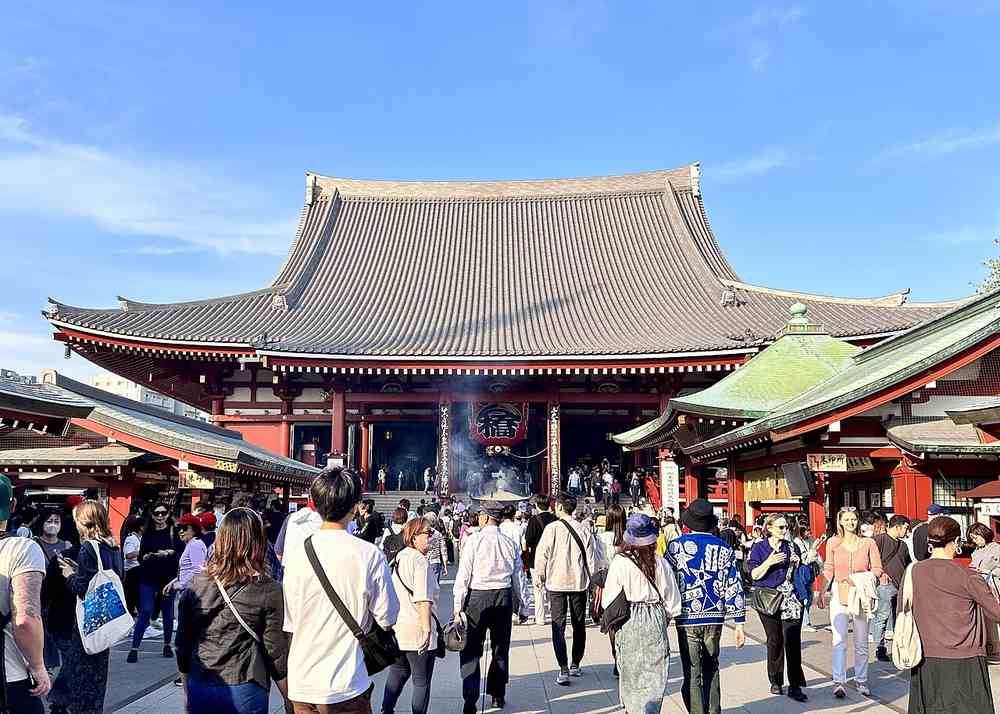 Photo: Wikimedia Commons
Is Sensō-ji worth visiting?
Yes. Sensō-ji is Tokyo's oldest temple, founded in 628, and it costs nothing to enter. The main hall opens at 6:00, earlier than almost anything else in the city, which is the one reliable way to see the place without crowds. The approach through Kaminarimon and the Nakamise shops matters as much as the hall itself. Allow 60 to 90 minutes for the grounds and the side halls.
The story
The temple's own account puts its beginning on a spring morning in 628, when two fishermen brothers, Hinokuma no Hamanari and Takenari, pulled a small statue of Kannon out of the Sumida River. Their village headman recognized what it was, took vows, and turned his house into a temple. In 645 a monk named Shōkai built a proper hall and, acting on a dream, sealed the statue away. It has stayed sealed ever since.
Tokugawa Ieyasu made Sensō-ji an official prayer site for the shogunate in 1590, and the crowds followed. Shopkeepers were licensed along the approach in 1685 in exchange for sweeping the grounds, which is where Nakamise begins. By 1844 Edo's three licensed theaters had moved to Asakusa. Firebombs destroyed the main hall and pagoda on 10 March 1945; both were rebuilt in the 1950s, and Panasonic's founder paid for a new Kaminarimon in 1960.

Stand in front of the main hall and Kunato tells you the rest — including what government inspectors reported in 1869, the one time anyone was allowed to check that the hidden statue was really there.
Hear it in the appVisiting
The official site publishes opening hours only for the main hall — for the other halls it asks visitors to call 03-3842-0181 on a weekday.
Questions travellers ask
Yes. There is no admission charge to walk through Kaminarimon, along Nakamise, or into the main hall, and the temple's official site lists opening hours with no entrance fee attached. You pay only for what you choose: incense, a fortune slip, an amulet, or one of the occasional ticketed special viewings such as the Denbōin garden opening.
The main hall opens at 6:00 from April to September and 6:30 from October to March, and for the first hour or two the approach is close to empty. The Nakamise shops open later in the morning and the crowd builds from there. Sensō-ji draws more than 30 million visitors a year, so a weekend midday is dense.
Yes, if you want the one place that still shows the older city. Asakusa puts a temple founded in 628, a 250-meter shopping street that has fed pilgrims since 1685, and the Sumida riverfront inside a single ninety-minute walk. If your day is already committed to Shibuya and Shinjuku, though, the round trip may not fit.

Nearby historic sites in Tokyo
KATARIBE